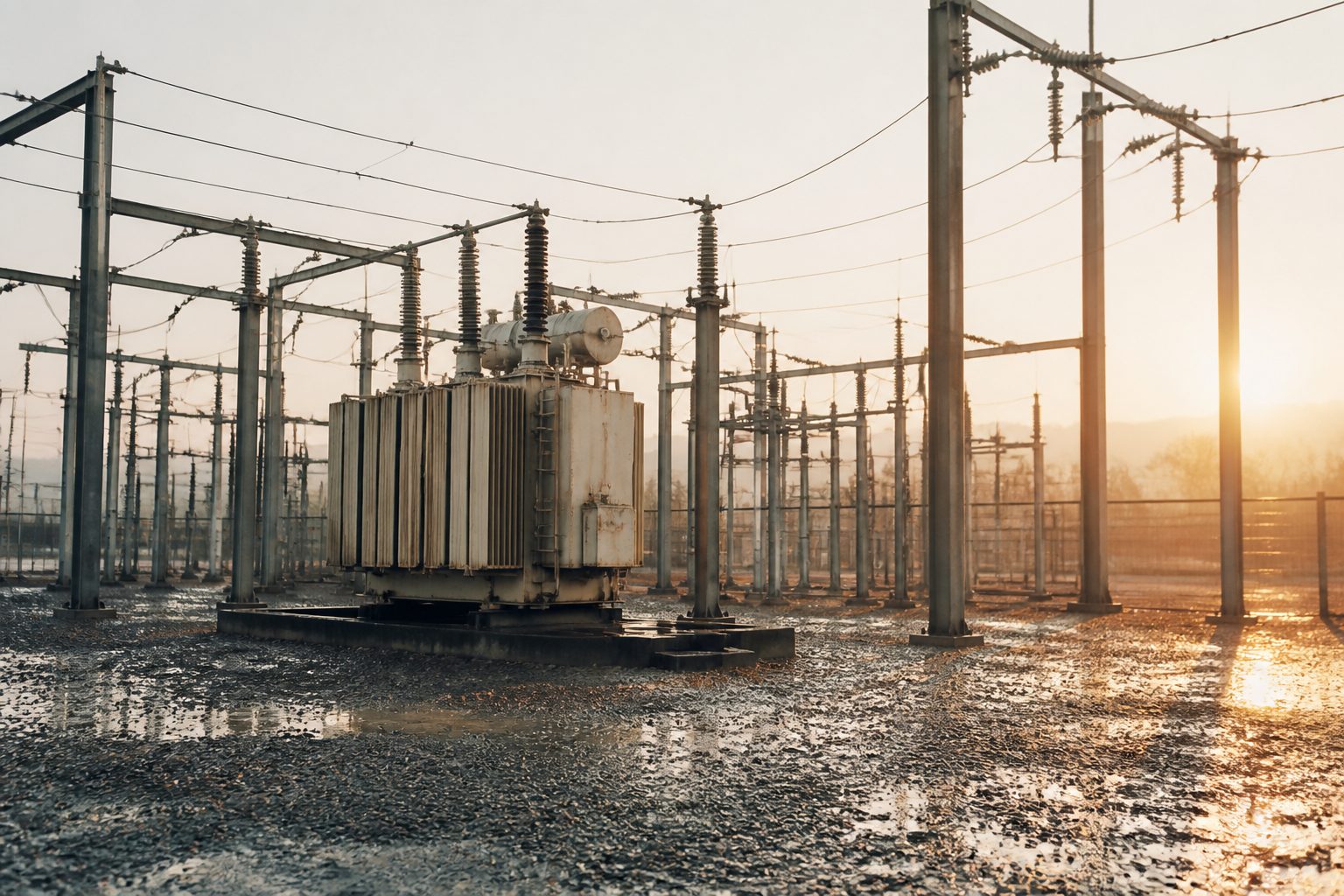
France has two nuclear stories and they get confused on every earnings call and every summit stage. One is the future reactor at Flamanville or the next EPR. The other is the fleet that already exists, with outages, welders, and a politics of keeping the lights ordinary. Industrial users live on the second story. The first story is for summits. Both can be true. Only one pays the bill this decade.
The 2026 evidence is plainer. Flamanville is a presidential project with a moving date. An old 900-megawatt core that ASN allows to keep running is the French watt this decade. EDF’s existing fleet is the country in electrical form. Engie and the industrial users depend on that distinction. The ribbon can wait because the lights cannot.
A drawing of the next EPR treats France as flattered to see the future. ASN treats an old core as a weld, an outage, or a life-extension file. Tricastin can already be this decade if the regulator says so. The Flamanville date can keep moving. Those are different French products.
Ask which core is allowed to stay
900-megawatt cores at Tricastin, Bugey and the rest of the old fleet are the watt this decade. ASN is the Autorité de sûreté nucléaire. An outage that stretches into a quarter is what industrial users feel in their power bills.
One treats the moving Flamanville date as proof the old fleet is optional. One treats a drawing of the next EPR as proof the industrial users are covered. One reads a quiet quarter as proof outages stopped mattering. Welders will go on working. ASN does not forget a life-extension file either.
Tricastin, Bugey, and the 900-megawatt cores
Tricastin and Bugey are the names that belong on the map before the slide ends on the next reactor. They are old 900-megawatt cores in a country that built its electrical identity around plants that were supposed to run for decades and then had to be maintained like aircraft. ASN’s work on those cores is the useful French power. Not a programme slide. The regulator deciding whether an old core may keep running while Flamanville’s date moves again.
France spent a generation being good at the last mile of industrial policy: a fleet large enough to keep aluminium, chemicals and rail on one story, a utility in EDF that could be treated as the country in electrical form, a politics of keeping the lights ordinary even when the weld schedule was not. That work got Engie and the industrial users through years when the next reactor was always next. It did not replace an outage calendar. A core ASN clears to run is a machine. A hall waiting on a new drawing is a summit story that ran ahead of a watt.
Outages on the existing fleet are the French power story this decade. Flamanville’s date can keep moving. The lights cannot wait for it. It is the whole French problem, stated as old cores in one county and a presidential project in another whose calendar keeps slipping.
Penly, Gravelines, and the fleet EDF already runs
Penly and Gravelines are the same old fleet. They are not interchangeable with Flamanville. They are addresses where EDF already runs cores, schedules outages, and files the paperwork industrial users read as a power bill rather than a ribbon. A presidential visit to Flamanville does not clear a weld at Tricastin. Engie and the industrial users already know which story they live on.
A working life-extension would let a named core show continued operation in a filing ASN signed, not in a brochure about Flamanville. That filing on the terms this page cares about is the invalidation horizon through 31 Dec 2029. EDF already runs Penly and Gravelines. It also already lives with outages the summit stage forgets. Praise the next reactor after you name who already has watts and who is still waiting on a regulator letter.
Flamanville and the EPR that keeps moving
Flamanville is where France keeps putting the future on a stage. The next EPR is a date that has already moved. It is the public object that separates this theme from another energy conference. Presidential projects queue for ribbons. Important users assume the next reactor is flattered to see them. ASN’s job is to keep the old fleet safe while the drawing for the new one keeps slipping.
This is Germany’s chemical works and Ireland’s data-centre hall in a different accent. In each case the new building arrived in the speech before the operator finished the sentence about supply. France is unusually good at making the next reactor look inevitable. Concrete at Flamanville, EPR in every slide deck, a workforce that speaks the language ministers want on television. None of that is a life-extension approval at Tricastin.
A year through 31 Dec 2029 with no named French reactor life-extension approved and running closes this read. Until then, the honest uncertainty is whether EDF puts the old core on the record before the Flamanville slide forgets who already runs and who still waits on ASN.
If a named life-extension is approved and running while Tricastin and Bugey were already on the map, the public notice moved second and the fleet was first. If EU power prices move without a named French life-extension filing, something else is driving the print. If France stays quiet while Penly and Gravelines run on ordinary quarters, EDF is doing its job and the outage calendar is still the story. Quiet is live load doing what the plants were built to do while the next EPR waits on a moving date.
A named life-extension approved and running is the document that counts. Read ASN before the Flamanville drawing. Read Tricastin before the next EPR. A speech about French nuclear pride is optional.
The map is Tricastin, Bugey, Penly, Gravelines, EDF, Engie, ASN, and only then a life-extension file that names the watt or refuses it.
Ask which core is allowed to stay. Then look at the new drawing. The ribbon at Flamanville is a speech. ASN publishes the constraint. The next EPR drawing does not. The French watt this decade is the old core at Tricastin or Bugey if ASN says so.
This decade lives on the fleet that already exists. Cut the ribbon after the old core was cleared to run.
The ribbon at Flamanville is a speech. The old core at Tricastin or Bugey is the French watt this decade.