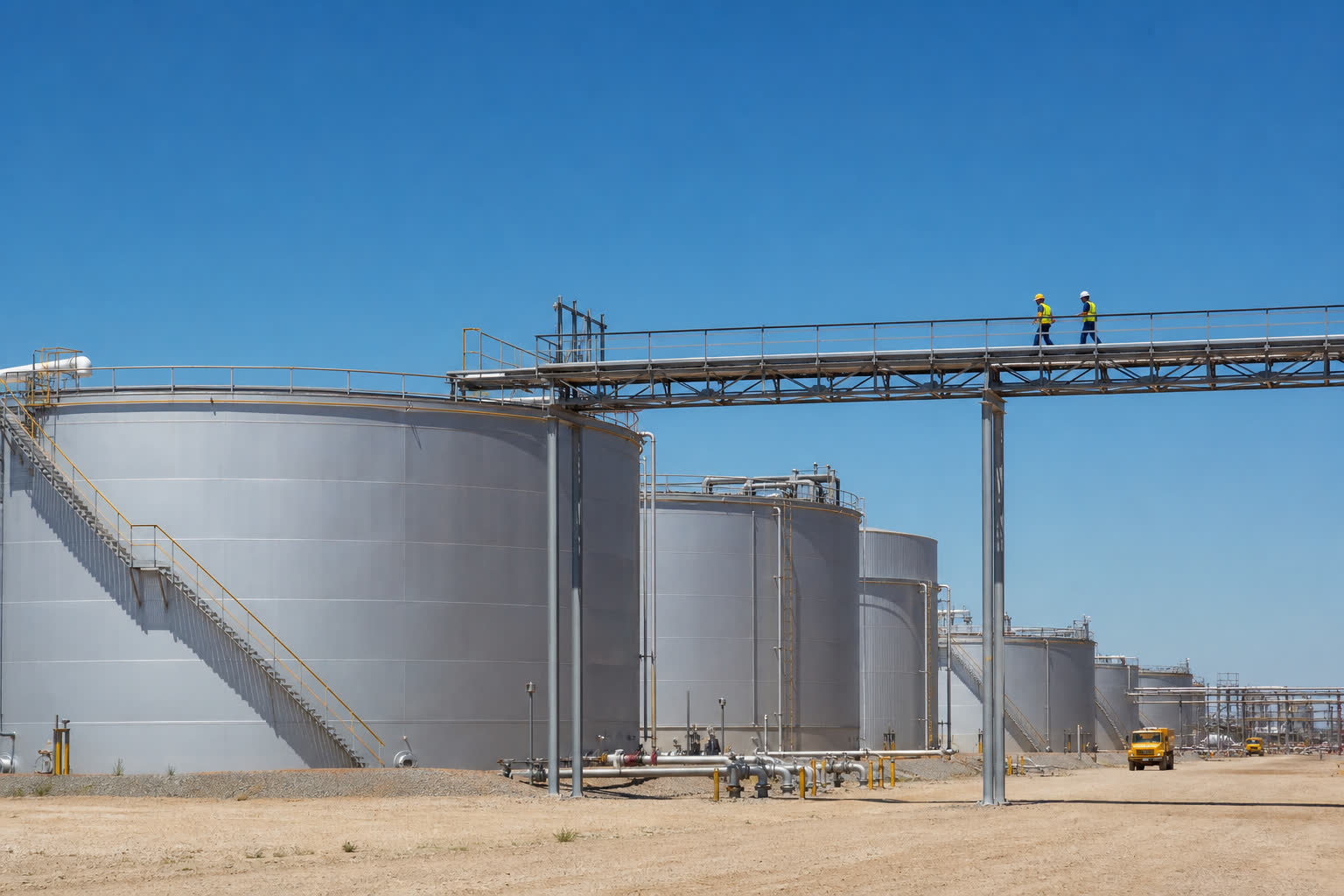
Thursday 10 September printed three objects. West Texas Intermediate closed 102.82, up 7.05 percent. Brent closed 107.93 from the prior close of 101.43, a session rise of 6.41 percent. The energy sector fell 0.68 percent. The 10-year rose 10 basis points from 4.84 to 4.94 percent. Flatten the barrel into the sleeve and you miss the coupon. Flatten the sleeve into the barrel and you miss the listed book. The useful sentence is the split.
A 102.82 barrel next to a 10-basis-point coupon is a cost-of-capital print for the listed book.
Listed energy is not a barrel. Holders own producers, refiners, and service names. A producer sells crude and still has to fund the next well. A refiner buys crude and sells product. A service name sells hours, tools, and a parts book. None of those three is 102.82. No named producer 10-Q, no crack integer, and no service-hours line sat on this week's file.
Last Friday was the other split
Friday 4 September the energy sector rose 1.66 percent while West Texas Intermediate closed 91.31 from 91.62, down 0.34 percent. That page already spent the slogan that the sleeve is the barrel. Thursday spent it from the other side. Two Fridays, two directions, one lesson: the listed book and the pit are not one object. Recasting this Thursday as last Friday with a bigger barrel is how a reader owns the wrong thing.
The coupon is the third object, and it is the one the energy page usually skips. Last Friday the 10-year rose two basis points to 4.78 percent and Utilities still printed green. This Thursday the 10-year jumped 10 basis points from 4.84 to 4.94 percent. Utilities fell 0.23 percent. Friday they fell 1.56 percent while the 10-year added 3 basis points to 4.97 percent. Constellation sells nuclear megawatts at a PJM auction. That is a rate-base bid and an interconnect letter. A power name that prints red while crude spikes is duration, not oil.
Caterpillar's 4 August 8-K booked 20.543 billion of second-quarter sales. Power and Energy printed 8.238 billion. Oil and gas named reciprocating-engine aftermarket parts as a plus, next to turbines. That sentence is hours and a parts book. Recasting Caterpillar as West Texas Intermediate because both sit near energy on a heatmap is the same flattening the 4 September page already refused.
What Thursday is allowed to mean
If you believe the split, you believe a 102 barrel that arrives with a 4.97 percent coupon is a working-capital and WACC event for anyone who drills, refines, or services. The pit can print a spike. The listed book can still fall. You do not own the sleeve as a crude proxy. You wait for a named producer filing that prints a realized price, or you stay with the barrel itself. Microsoft and Chevron named Kilby at 2.67 gigawatts for 2028. That Chevron is a power offtake. Do not steal it.
If you are wrong, Energy leads a later session with WTI still up 1 percent or more on that same close. Then the sleeve was late, not a different object. Friday 11 September already argued against late: West Texas Intermediate closed 100.58 from the Thursday close of 102.82, a session fall of 2.18 percent, and Brent closed 104.81 from 107.93, a session fall of 2.89 percent, and Energy still fell 0.23 percent. The sleeve did not catch the barrel on the way up. It did not catch it on the way down.
From 4 September to 11 September the barrel moved from 91.31 to 100.58. Thursday was the jump. The energy sector that session was minus 0.68 percent. The 10-year that session was plus 10 basis points from 4.84. Write all three, or you will treat a cost-of-capital print as a windfall.
The pit printed 102.82. The sleeve printed minus 0.68 percent. The coupon printed 10 basis points from 4.84. Write all three.