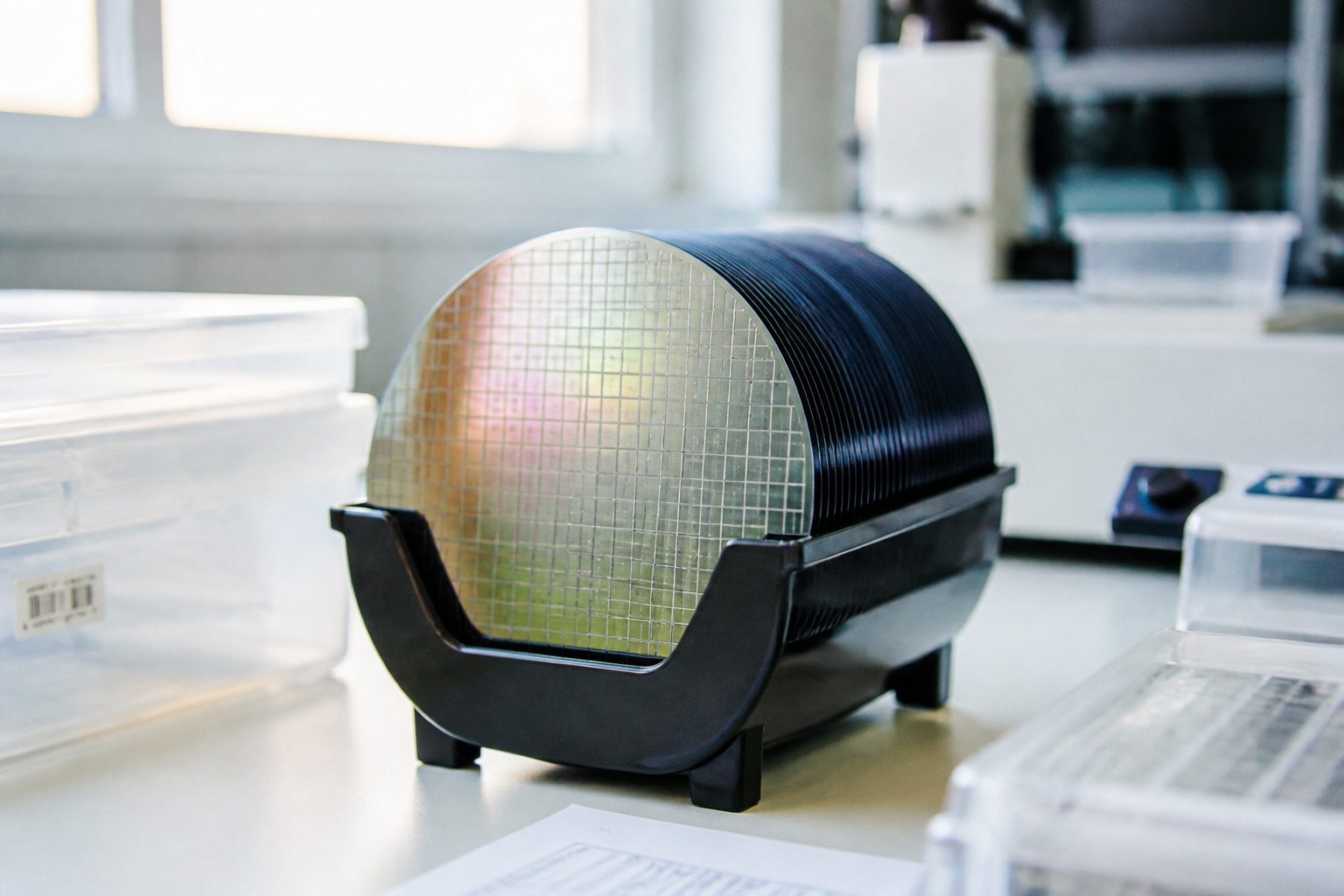
Foundries sell a node. ASML sells a scanner. One is a name on a slide out of Hsinchu, Hwaseong, or Hillsboro. The other is a machine out of Veldhoven that has to hold dose, focus, and overlay long enough for a layer to print inside spec. Mix those two and a brochure gets graded as a tool.
A process window is the range of those three knobs in which a feature stays legal. Yield lives inside that range. The brochure lives outside it. What leaves Veldhoven is a machine that prints that window, layer after layer, or fails in public as extra masks. The node name is what the foundry put on the cover after the window, or a workaround for a missing window, had already done the work.
TSMC, Samsung, and Intel name nodes. N3, N2, 18A. The same marketing number can be printed with different mixes of deep-ultraviolet immersion and extreme-ultraviolet scanners. Extra masks can buy a name the single exposure could not. The name does not disclose which machine sat over the wafer, or how many times it sat there.
Deep-ultraviolet immersion still prints most of the stack. Extreme ultraviolet is a class of scanner used on the critical layers. A nanometer label can still be an immersion job with extra patterning. Treating EUV as the node is how a reader buys the cover.
High-NA EUV is a different scanner, not a later node. The optics change. Calling High-NA a node repeats the first error at a larger aperture. A tool that ships and still needs the old splits has bought another machine. It has not bought a generation.
When the window is too small, the foundry splits the layer. Extra masks, extra etches, extra overlay. That is the cost of a name that ran ahead of the machine. Single-exposure EUV is the claim that the window is wide enough. Double patterning on a layer already sold as EUV is that claim failing in public, even if the node name stays on the slide.
The abundance page already asked who gets paid. A GPU can be sold while the stack is still waiting. Treating ASML as a beta on a foundry slogan, or as a node arriving, is how a reader buys marketing. Veldhoven sells a window. Hsinchu, Hwaseong, and Hillsboro sell a name for whatever that window, or the splits around it, managed to print.
TSMC, Samsung, and Intel name nodes. Veldhoven sells a scanner that has to hold dose, focus, and overlay. Extra masks can buy a name the single exposure could not. A High-NA shipment that still needs the old splits has bought another machine. A five-day move in the share does not rewrite the mix.
The window is the product. The name is marketing.